Advancing local specificity to global impact: Highlights from the 2026 GPAI-Associated Innovation Workshop in Rio de Janeiro
Co-organized by Brazil’s National Laboratory for Scientific Computing (LNCC) and the Ministry of Science, Technology and Innovation (MCTI), alongside the GPAI Centres of the Expert Community (CEIMIA, Inria, and NICT).
AI governance is frequently addressed at high-level summits and in international forums. Yet, the true measure of our progress lies in how these systems adapt to the specific, lived realities of communities worldwide. How do we ensure that global AI frameworks don’t become a one-size-fits-all solution for a world of such diverse contexts?
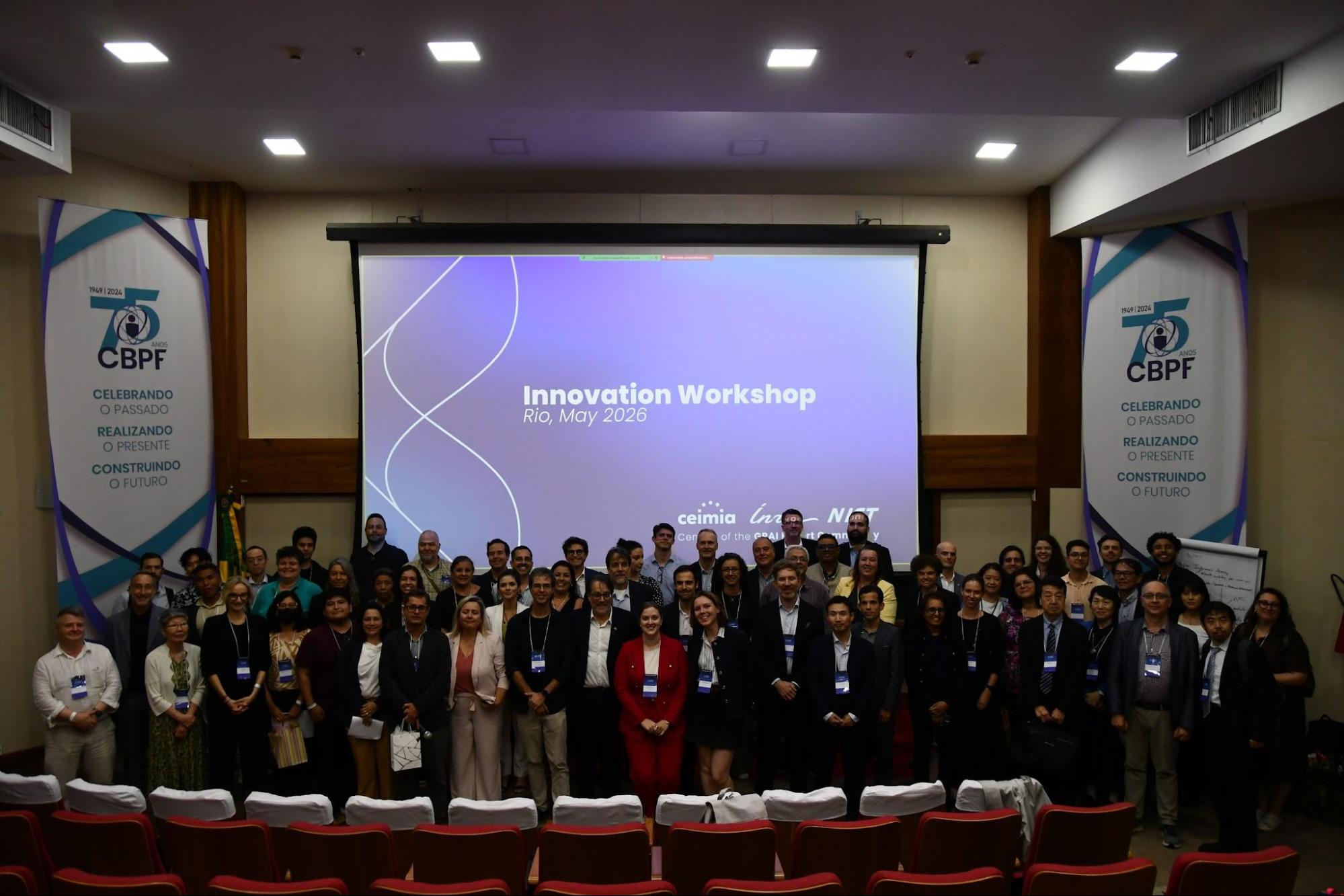
Last May in Rio de Janeiro, 75 experts from across the globe gathered to tackle the tension between global frameworks and local realities during the 2026 GPAI-Associated Innovation Workshop at Centro Brasileiro de Pesquisas Físicas, Brazil. By focusing the conversation on real-world needs, the workshop laid the foundations for upcoming projects to be carried out by the GPAI Centres in Montreal, Paris and Tokyo. This year, particular focus was placed on AI literacy and informed agency, international cooperation frameworks, data sovereignty, and cultural and linguistic diversity in AI models.
Engaging the GPAI Expert Community to co-design GPAI-associated projects
The Rio Innovation Workshop created an active, collaborative platform designed to explore concrete challenges to AI. This year, a diverse mix of global stakeholders, including strong representation from Latin American countries, met to transform broad consultations across the GPAI expert community into concrete projects.
Some of the plenary speakers and moderators included Dr. Fabio Porto (IIA-LNCC), Dr. Luca Belli (Center for Technology and Society), Dr. Merve Hickok (Center for AI and Digital Policy), Dr. Marcelo Portes de Albuquerque (Centro Brasileiro de Pesquisas Físicas), Dr. Jose Macedo (Federal University of Ceará), Jeff Ward (Animikii Indigenous Technology), and Dr. Maya Sherman (Senior AI Advisor and Researcher).
The opening ceremony featured remarks by Vice-Minister Henrique Miguel, Ministry of Science, Technology and Innovation of Brazil, Mr. François Jubinville, Consul-General of Canada in Rio de Janeiro, Mr. Eric Tallon, Consul-General of France in Rio de Janeiro, and Mr. Manabe Takashi, Consul-General of Japan in Rio de Janeiro.
From AI literacy to informed agency
One of the themes of the Rio Innovation Workshop explored how to move beyond AI literacy: not only helping people understand AI, but making them better informed and enabling them to mobilize their agency, so that stakeholders across sectors can make evidence-based judgments about both the opportunities and the limitations of AI, and act on them. To advance this goal, participants proposed an initiative to develop a common framework for informed agency through research, consultations, and collaborative workshops, creating a foundation for more effective engagement with AI in real-world contexts.
International cooperation frameworks for AI governance
Building on the foundations of the previous workshop in Tokyo, this track examined cooperation frameworks for AI governance in a world where countries face diverse technical, economic, and policy realities. Current international frameworks do not always fit different technical and economic landscapes. To bridge this gap, participants proposed the creation of a collaborative platform that would connect governments with relevant expertise and real-world case studies, helping identify and implement AI solutions that meet their specific needs. Discussions also explored a complementary testing platform that would provide a practical space for public sector organisations and AI providers to assess whether AI systems and policies are fit-for-purpose, to support more effective and accountable AI adoption.
Scaling local data for global scientific discovery
AI can fundamentally change scientific research by shifting focus from generalized models to highly specific local data. This track explored how localised and contextualized datasets can be shared in ways that enable broader scientific and societal benefits while respecting the needs and contributions of local communities; for example, science breakthroughs in global health, epidemiology, and environmental science. The group proposed developing common standards and technical specifications for data and AI sharing infrastructures, alongside pilot projects to demonstrate how flexible, secure, and federated approaches can support the responsible use of local knowledge at regional and global scales.
Harnessing Cultural Diversity
Building on the foundations laid during the Tokyo Innovation Workshop, this track focused on how AI systems often fall short when it comes to reflecting local languages, norms, histories, and values; which can lead to misrepresentation and diminished trust within communities. The group proposed developing a centralized hub to connect researchers, experts, and developers working on culturally responsive AI, along with collaborative resources-mapping efforts to better understand and share existing tools and guidance, identifying mechanisms that support community sovereignty within the global digital landscape.
What’s next?
Building on the discussions at the Rio de Janeiro Innovation Workshop 2026, the Centres will propose GPAI-associated projects for the work plan for 2027.
The final selection of projects will be decided at the GPAI Plenary in December 2026, marking the next major milestone in turning these collaborative principles into practical insights.